Let ‘er rip

Ok, I have to nerd out here.

As a coastal engineer, part of our research this December will involve putting out disposable drifters that capture surface currents over a submerged reef off Newport, Oregon (think little floats that ping their location up to SpaceX or something, where we’ll see the data in real-time). The goal is to understand how rip currents behave in the presence of a storm, and whether we can potentially model the behavior of these rips.
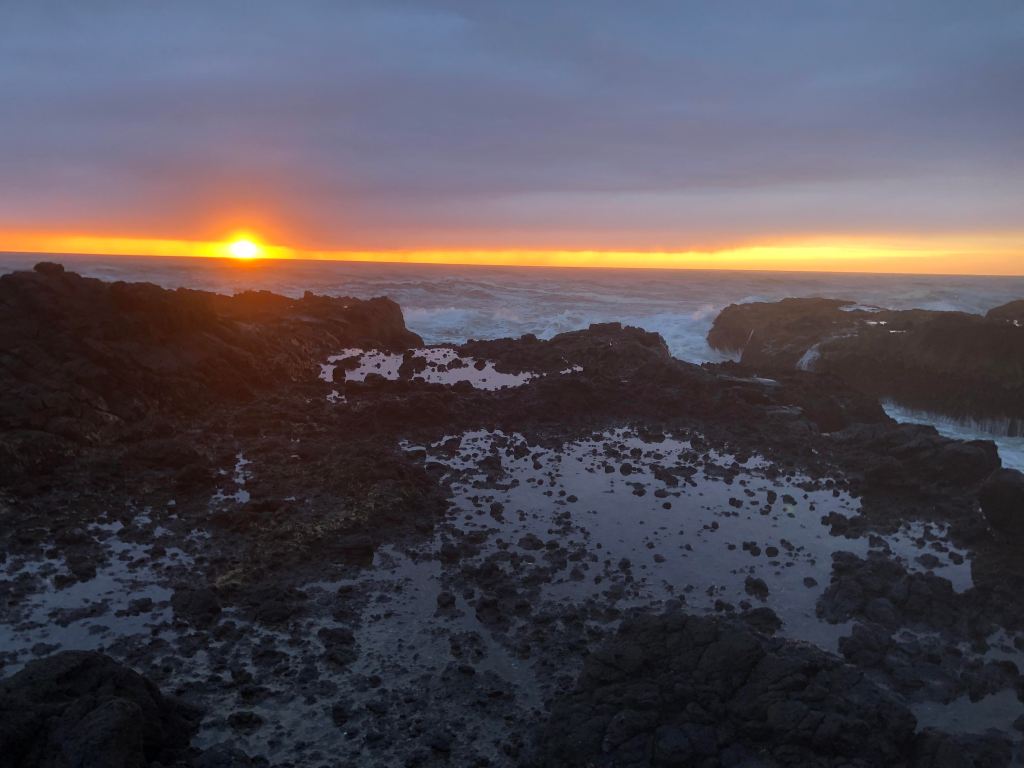
The Oregon coast in springtime

Scientists have tried to pin down exactly how rip currents behave for decades. It’s also been the bane of many a lifeguard’s existence since beach safety was first introduced. A 1941 article by Shephard et al. in the Journal of Geology stated that lifeguards referred to these things as “rip tides” or “sea pusses” (I don’t recommend you use the latter term). Since this time, our understanding of rips has increased substantially. A few facts for you:

  1. Rather early research describes rips are caused by an excess of water build up on the shore from waves, resulting in currents that move along the shore close to the beach. At varying times and locations, these currents meet and turn seaward to form outgoing rip currents (Mckenzee, 1958).
  2. More recent studies found that where rips form is directly linked to the variability of where waves break along the shoreline. This variability causes excess momentum in some areas and lessened momentum in others. Of course, energy will move from high to low. Thus, rips tend to form in certain areas and change in intensity and location, factors which scientists are hoping to predict more accurately in the future (Castelle et al., 2016).
  3. If you find yourself caught in a rip, follow the advice of several survivors, who say firstly, not to panic. Try not to fight the rip, but allow it to carry you as you try and swim parallel to the shoreline to escape the strongest current (Drozdzewski et al., 2012).

The coast is a fascinating place. It holds mysteries yet to be unlocked by the curious, excitement to the recreationist, and a sense of wonder to all who visit. The ocean is also a powerful force to be reckoned with, and knowing what it can do may just keep you from giving in to its watery g”rip”.

(For an example of the power of the ocean, see a previous post, “The Unmoving Coaster” from 2020).

  • Castelle, B., Scott, T., Brander, R. W., & McCarroll, R. J. (2016). Rip current types, circulation and hazard. Earth-Science Reviews, 163, 1-21.
  • Drozdzewski, D., Shaw, W., Dominey-Howes, D., Brander, R., Walton, T., Gero, A., … & Edwick, B. (2012). Surveying rip current survivors: preliminary insights into the experiences of being caught in rip currents. Natural Hazards and Earth System Sciences, 12(4), 1201-1211.
  • McKenzie, P. (1958). Rip-current systems. The Journal of Geology, 66(2), 103-113.
  • Shepard, F. P., Emery, K. O., & La Fond, E. C. (1941). Rip currents: a process of geological importance. The Journal of Geology, 49(4), 337-369.
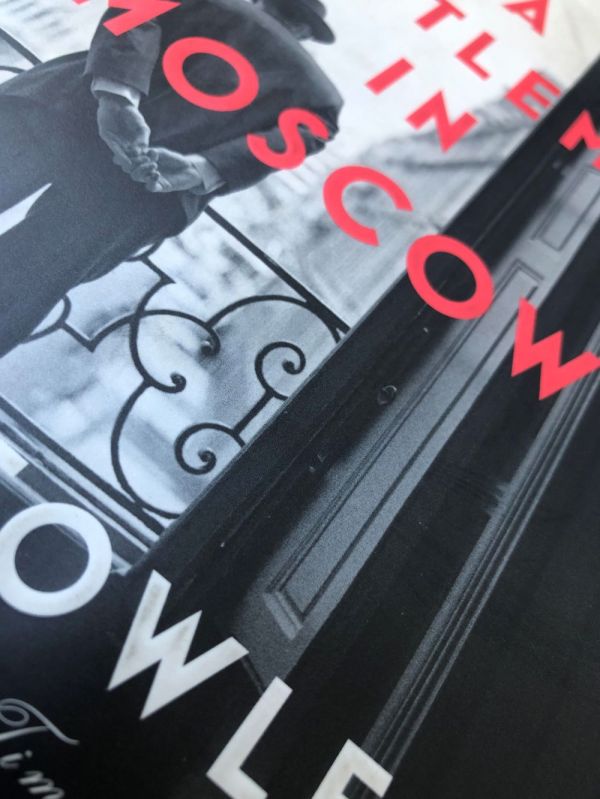
Review – A Gentleman in Moscow

They say the pen is mightier than the sword, yet Amor Towles has managed to master both. After each (rather small) progression through “A Gentleman in Moscow”, I am shocked at his ability to both capture my imagination and cut me to my core. 

This eloquent writing is not overly dense, as one would expect from the enigmatic pages of “Infinite Jest”, or more verbose works of C.S. Lewis, and tackling a chapter or two does not render the reader with a furrowed brow and finger buried in their mess of hair (or lack thereof). He can somehow string together phrases with more ease than a yellow-coated lobsterman can serve you the meat of that beloved red crustacean. 

So, without further ado, it is my delight to recommend you pick up any of the works of Amor Towles. I think you’ll find yourself grinning, let alone smiling, after each read.

On Love

I’ve recently begun the perilous, rewarding, nerve-wracking, riveting journey of seriously dating someone. She’s wonderful.

We’re compatible in so many ways.

We’re different in so many ways.

Sometimes I marvel at her ability to say exactly what I’m thinking, and yet, sometimes my thoughts resemble apples and hers oranges. Like stepping out of your car to an ocean when you thought you were going to be greeted with a vast mountainous expanse. But here’s the thing. There are places where the mountain meets the ocean and spectacular beauty lies there.

Every day is a journey in these uncharted waters, and I can’t wait to see what’s around the next bend.

Stay tuned.

Why we need the outdoors

You can feel the crunch of rock and dirt beneath your feet. The subtle whoosh of wind through trees as the sun bounces between nebulous clouds. You close your eyes and listen.

There’s something about the outdoors that seems to bring peace. And simply being out there is so good for you. Bratman et al., (2015) found that an experience outdoors in a natural environment compared to an urban environment had a greater impact on decreasing anxiety and increasing verbal cognitive memory. Another study indicates that time spent outside increases a child’s attention span and decreases stress, which, in lieu of COVID-19 and the shift to virtual learning, is very much needed (McCurdy et al., 2010). The spectrum of benefits is not restricted to the young alone, as research also shows that spending time in a garden slows cognitive decline and reduces falls in elderly patients with dementia (Whear et al., 2014).

So, I know you want to plop down on that comfy couch and throw on the Mandalorian, The Whitcher, The Last of Us, Stranger Things, Ted Lasso, Love is Blind, Arnol…. I could go on, but try going for a walk in the park instead. Your body and mind will give you a standing ovation in the long run.

(Can you guess where the photo was taken?)

  1. Bratman, G. N., Daily, G. C., Levy, B. J., & Gross, J. J. (2015). The benefits of nature experience: Improved affect and cognition. Landscape and Urban Planning, 138, 41-50.
  2. McCurdy, L. E., Winterbottom, K. E., Mehta, S. S., & Roberts, J. R. (2010). Using nature and outdoor activity to improve children’s health. Current problems in pediatric and adolescent health care, 40(5), 102-117.
  3. Whear, R., Coon, J. T., Bethel, A., Abbott, R., Stein, K., & Garside, R. (2014). What is the impact of using outdoor spaces such as gardens on the physical and mental well-being of those with dementia? A systematic review of quantitative and qualitative evidence. Journal of the American Medical Directors Association, 15(10), 697-705.

A different energy

A legion of plastic cleats digs into turf. Pivoting. Planting. Stopping. Touching down for a moment, and then off, like a heated game of hot potato. All with one purpose. Come in contact with that elusive airborne sphere.

Moving up from the ground one can see the labored breathing of two teams vying for one shot at the goal on either side of their field of battle. Pennies vs. shirts. Every Saturday at 9 am. Here players leave their cultural and political differences at the gate and come together to share in what one can simply say as a heightened state of energy. There’s something to be said about the excitement surrounding the game.

Many of the members of the soccer club are Nigerian. They joke, laugh, and bring an emotion to the field that’s unlike any other (and man, most of them can wipe the floor with me). I just love being around those dudes.

When was the last time you felt wrapped up in a heightened state of energy?

*Thanks to Ben Smucker for help with descriptions!

Blog at WordPress.com.

Up ↑