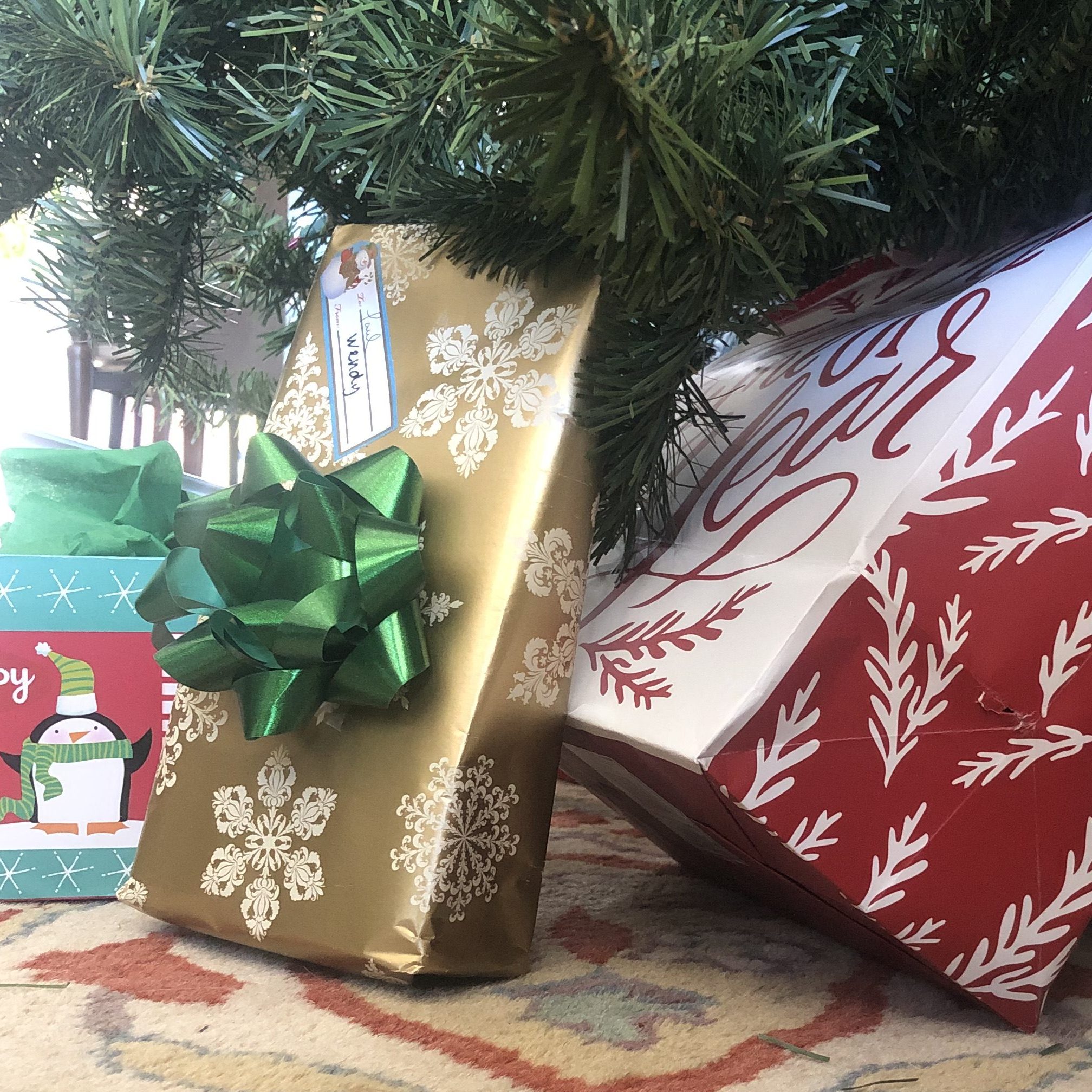
Gift giving

You unwrap the thin reindeer-covered box and notice the familiar brown of an Amazon package. After tearing the tape off the corners, you reveal a pair of socks bedecked in a pattern of mini Tabasco bottles. To boot, the size is L. You’re M. Your pal looks at you with expectation as you feign a smile through gritted teeth.

“Thanks, Jimbo,” you say, mustering what little resolve you have left in the tank. A flutter of fear flashes across his face and he knows he goofed.

Finding this scenario relatable? A 2021 survey conducted by The National Retail Federation1 indicates that the rate of gift returns shot up from 10.6% in 2020 to 16.6% in 2021. Seems that many Americans miss the mark on what they think others will like and what they truly enjoy. So, how can we give gifts that last the test of time? Below are a few tips on giving a great gift during the holidays:

  1. It might be a good idea to take time to reflect on the receiver’s personality type. A recent NPR report says that catering your gift to someone who is either into experiences, is practical, sentimental, cozy, or just an enigma to you can go a long way toward getting something that they will enjoy2.
  2. Consider giving an experience rather than a gift. Many times, givers tend to focus on the receiver’s immediate reaction, and more often than not, buy tangible items that can be used or consumed immediately, rather than a gift that takes longer to enjoy. However, a recent study has shown that doing this may be of greater benefit to the receiver in the long run3.
  3. Give a gift that has sentimental value! What experiences have you and the receiver had that you both cherish? Giving a gift that speaks to that relationship may sound risky, but will more than likely result in a better outcome than a gift that just caters to what you think the receiver’s preferences are4.

All this being said, simply showing someone that you care this season goes a long way. Just giving your time to give that call to a distant friend or relative may be the best gift of all.

Wishing you a wonderful Holiday season filled with fun, family, friends, and joy!
  1. https://nrf.com/media-center/press-releases/nrf-predicts-healthy-holiday-sales-consumers-navigate-economic
  2. https://www.npr.org/2022/12/14/1142750086/christmas-gift-giving-guide
  3. https://myscp.onlinelibrary.wiley.com/doi/full/10.1002/jcpy.1318
  4. https://www.sciencedirect.com/science/article/abs/pii/S105774081730044X

Our modern world

One may be able to simply look outside to realize the change that’s affected our world these past several years. Whether it takes the form of increasingly commonplace electric vehicles silently rolling down our streets, a Zoom conversation with unique backgrounds and edited faces, or even small Wall-E look-alikes bringing ordered food right to the front door (a story about it, here), we live in a place that’s rapidly evolving in time and space.

It’s honestly a little scary to think about. Ethical conversations continue to emerge around what we should do with newfound technologic discoveries. These advancements have an increasingly tight grip on the modern lifestyle and inevitably come with benefits and drawbacks. The question becomes, how do we identify the changes that are truly beneficial to humanity, and if so, what are the short- and long-term ramifications of exploring these new insights, let alone making them available to the public?

Answering these tough questions entails quite a bit of anxiety-inducing decision-making. It sometimes makes me think back to what life was like in the days of “Little House on the Prarie”. Life expectancy may not have been as long, and days might have been filled with wiping the sweat from our brows as we put food on the table, but I’m sure it would come with a sort of serene simplicity (at least initially). I’m sure after about two weeks we would start to miss popping on Netflix, or the freedom of a long-distance FaceTime. Alas, the grass is always greener.

But we need to live in the moment. Right here. Right now. Given our current context, I am hopeful that humanity will make the right decisions that benefit both ourselves and the future inhabitants of the planet long after we’re gone (fingers crossed).

Photo by Ales Nesetril on Unsplash

Recognition

A face materializes from the fog within your brain. The features start to sharpen, revealing that auburn hair you remembered from childhood. Just as the nose and eyes begin to come into focus the face vanishes leaving you with nothing but a blank emptiness in the mist.

“Shoot. What was her name again?” You say, scratching your head.

We’ve all been there. Someone recalls a person or an event from long ago, and we delve into the archives in our memory, walking down aisles we haven’t perused in what feels like forever. We finally locate that thought we think will give us the answer, dusting off the cover and popping it open to find the pages blurred and the book thinned since we picked it up last.

This is simply a fact of life that happens to the best of us, so how do we keep those books thick and aisles well cared for? Here are a few thoughts.

  1. Keep a journal. Occasionally write down an exciting event from the day or week. You can look back fondly in a few years and recall those times with ease.
  2. Reconnect with the people you enjoyed in your past. We have so many resources for reaching out these days that it probably won’t be hard to locate or connect with that person.
  3. Spend more time with the people you care about! If you are still graced with living grandparents, spend time with them and ask them to recall times when you were a child (heck, times when they were a child). It will most likely spark some memories you haven’t thought of in a while.

Time waits for no one, but what an amazing gift that we can use our minds to go back to those precious moments, or, with enough time, allow that featured face AND name to emerge from the fog.

Image: The foggy Oregon coastline, taken in October, 2022.

Fractals

Did you know that it’s technically impossible to capture a perfectly defined measurement of the perimeter of our coastlines?

As you know, coastlines across the world range from smooth beaches to rugged and rocky terrain. Imagine stopping time and taking an aerial picture of the coast nearest to you, with, say, a resolution of 5×5 km. Got the picture in your head? Whatever coastline you chose, the perimeter of that coastline will have jagged features with scales that range from kilometers to tiny micro-meters. How do you measure this?

Let’s start with, for example, a certain section of the Oregon coastline that we want to measure with a yardstick. Once we’re done (after probably months of work) let’s compare that measurement to a measurement of the same perimeter with the diameter of a penny (~19mm, and probably a lifetime or more of measuring). The total length of the measurements would be drastically different. The smaller your scale, the larger the total perimeter of your coastline… literally to infinity.

Benoit Mandelbrot, a famous mathematician, after discovering this phenomenon, said, “[The world’s] coastline length turns out to be an elusive notion that slips between the fingers of those who want to grasp it.”1

Our world is so incredibly complex.

  1. https://archive.org/details/fractalgeometryo00beno/page/25/mode/2up

Find a time to laugh

I’ve recently gotten into the new Hulu show, “Only Murders in the Building”, featuring larger-than-life actors such as Steve Martin and Martin Short, whose eccentric personalities are kept in check by a quirky yet chic Selena Gomez.

My new roommates and I will occasionally pop on a half-hour episode, to find ourselves holding our stomachs laughing, like just poked Pillsbury Doughboys.

We need moments like that. Points in time to disengage from the worry that the ever-churning machine of our modern world will always need our attention. Let’s take some time out of our day today to relax and laugh!

Blog at WordPress.com.

Up ↑